The Anonymous Traffic Challenge in German B2B Sales
Traditional customer acquisition in the German Mittelstand relies heavily on personal relationships, trade fairs, and inbound digital channels. However, even the most optimized digital pipelines suffer from a silent revenue leak: approximately 98 percent of B2B website visitors browse and leave without ever completing a contact form. For managing directors and B2B sales leaders, this creates a major blind spot. These anonymous visitors are not casual browsers; they represent prospects with active buying intent who are actively comparing service offerings, studying case studies, or reading product specifications.
- Friction and fatigue: Decision-makers are increasingly reluctant to fill out detailed forms or share contact details during their preliminary research phase.
- Premature departures: Prospects complete a significant portion of their buying journey anonymously, often evaluating solutions and leaving before a sales team is even aware of their interest.
- Lost timing advantage: If you only engage when a lead self-identifies, your sales team misses the critical window of early interest when the buyer is shaping their requirements.
- Wasted marketing spend: Massive investments in search engine optimization and digital campaigns go unrewarded when valuable corporate visitors depart without a trace.
To reclaim this lost potential, B2B mid-market companies must transition from passive lead capture to active visitor intelligence. Instead of waiting for a form submission, sales departments can identify the corporate entities behind the traffic in real time. Deploying tools like cernaTrace reveals which companies are visiting high-intent pages, such as your pricing or product sheets. This intelligence transforms anonymous web traffic into highly qualified outbound target lists. When combined with other sales triggers, it enables your sales team to reach out to active buyers with tailored solutions at the precise moment their interest peaks.
The B2B Buying Journey is Moving into the Dark Funnel
Modern B2B buying behavior has undergone a profound structural shift. Industry research reveals that 73 percent of the B2B buying journey now occurs anonymously within the dark funnel before a prospect ever makes direct contact with a vendor. For sales leaders and managing directors at German Mittelstand companies, this invisible research phase represents a major challenge. Rather than raising their hands early through traditional inquiry forms, modern buyers prefer a self-serve approach. They extensively evaluate solutions, analyze pricing, and define their technical requirements completely out of sight.
This lack of visibility means that traditional sales pipelines only capture a small fraction of active market demand. By the time a prospect finally fills out a contact form, they have often already finalized their purchase requirements and compiled a shortlist of preferred vendors. Sales teams that wait for this explicit inbound signal find themselves in a reactive position, forced to compete on price rather than value. To regain control of the sales cycle, organizations must find ways to illuminate these early, anonymous touchpoints.
- Anonymous website traffic where decision-makers review pricing pages and product documentation without submitting a form.
- AI-powered search and research queries where buyers use large language models to compare prospective vendors.
- Passive social media lurking and reading third-party review platforms without creating registered accounts.
Waiting for buyers to self-identify is a passive strategy that often leads to lost deals, as most buyers have already defined their requirements by the time they reach out. By implementing cernaTrace, sales teams can deanonymize website traffic at the company level. This GDPR-compliant intelligence integrates seamlessly with broader sales signal tracking to give outbound teams a competitive edge. Armed with this knowledge, sales representatives can initiate tailored conversations with warm accounts that are already actively researching their offerings, transforming a cold outbound process into a highly targeted, signal-led engagement.
How Website Visitor Identification Works Without Cookies
In B2B sales, waiting for website visitors to fill out a contact form is a losing game. Industry data indicates that up to 98% of B2B website visitors leave without sharing their contact details or showing their intent. Traditional tracking relied on third-party cookies to identify these users, but rising privacy regulations and browser security updates have rendered this method obsolete. Modern visitor identification instead leverages cookieless technology to map corporate network activity directly to public and private business registries. This approach completely bypasses individual user tracking, focusing instead on identifying the specific corporate entities exploring your digital offerings without compromising individual user privacy.
The Mechanics of Corporate IP Mapping
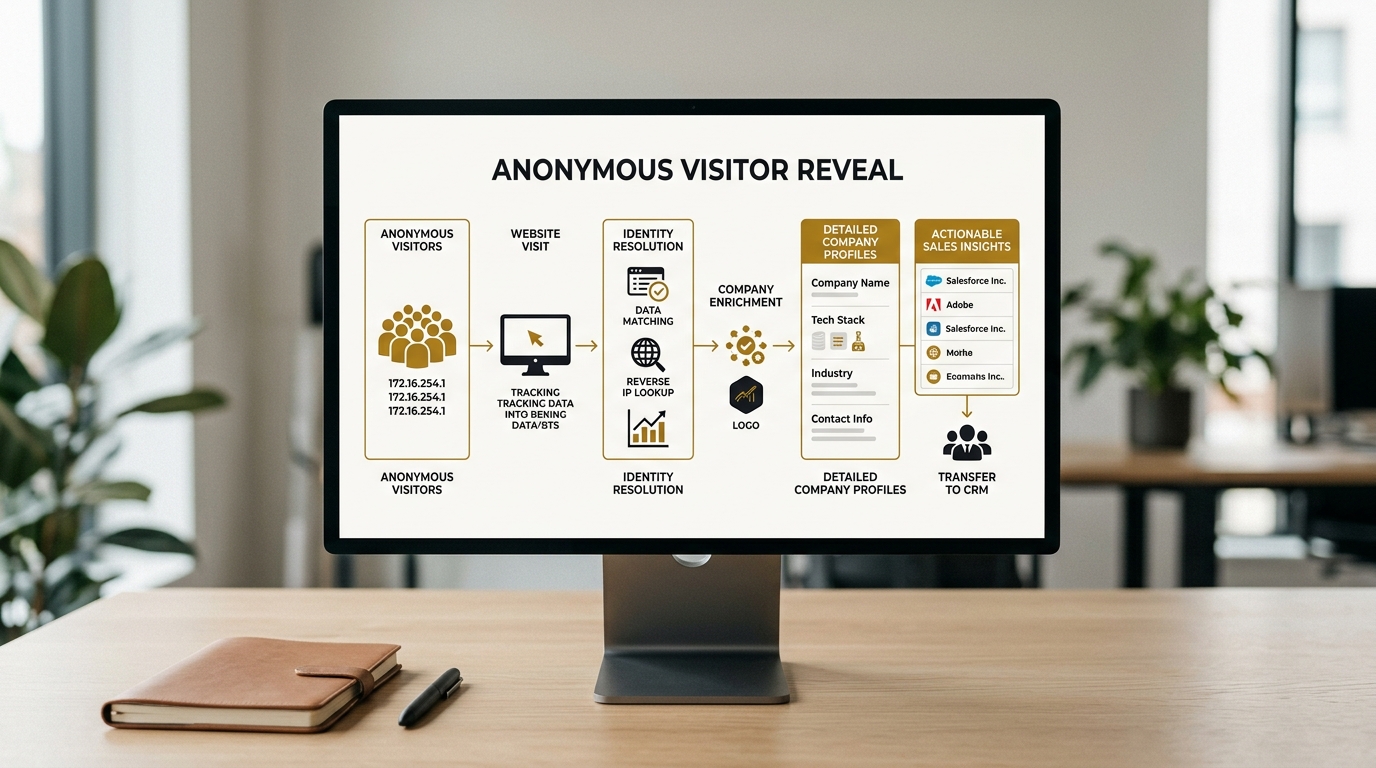
The technical backbone of this methodology is reverse DNS and IP address resolution. When an employee of a target company visits your site, their browser requests digital assets from your web server. Instead of placing invasive tracking cookies on their device, the system instantly reads the routing IP address and screens it against global databases of corporate IP ranges. Because mid-market companies in Germany often route their traffic through static corporate networks or business VPNs, this IP mapping delivers high-fidelity company-level data. By integrating this intelligence into cernaTrace (the website visitor recognition module of Cernavio), sales leaders can immediately monitor high-intent accounts within their sales pipeline.
- The anonymous visit: A user from a B2B organization browses your core product pages, pricing tables, or case studies.
- Real-time IP capture: The analytics script captures the incoming corporate IP address and screens it against an extensive global registry.
- Domain resolution: The corporate IP address is matched to a verified company domain, weeding out residential Internet Service Providers.
- Firmographic enrichment: The identified corporate entity is enriched with industry, employee size, and geographical location data to determine immediate sales fit.
Navigating GDPR and Compliance for the German Mittelstand
For German Mittelstand sales leaders, data protection is a primary operational standard that cannot be compromised. B2B visitor identification operates on a foundation that differs from standard tracking. Instead of profiling individual natural persons, tools like cernaTrace focus exclusively on identifying the company behind the IP address. This processing is based on the legitimate interest of the business to identify potential clients, as defined under Article 6(1)(f) of the General Data Protection Regulation (GDPR). Because no personal data of individual website visitors is stored or analyzed, this approach aligns with the strictest legal interpretations of European privacy laws.
To implement this technology correctly, companies must meet specific requirements that safeguard compliance. The system must operate without cookies that require consent, and it must immediately filter out residential IP addresses to prevent the collection of private user data. Additionally, businesses must provide an easy way for visitors to opt out of tracking. Maintaining transparency is essential, which means updating your legal pages to reflect the use of company-level intelligence tools.
- Update your official privacy policy to detail the collection of company-level IP data for marketing purposes.
- Ensure a clear and functional opt-out option is easily accessible on your website.
- Configure your tracking system to exclude all private residential networks automatically.
- Incorporate visitor insights directly into your outbound sales workflow to maintain professional, non-intrusive communication.
By taking these standard steps, mid-market sales teams can utilize cernaTrace confidently. Integrating compliant tracking means you respect privacy while unlocking the 98 percent of anonymous business traffic that otherwise goes unnoticed. For complete details on compliance and data processing, refer to our detailed privacy policy to ensure your setup meets all local regulations.
From Anonymous IP to Actionable B2B Lead
On average, up to 98% of B2B website visitors leave without filling out a form or revealing their identity, representing a significant loss of active buying intent. For sales leaders at German Mittelstand companies, capturing this hidden demand is vital to maintaining a competitive edge. Transforming anonymous traffic into a healthy pipeline requires translating raw visitor data into qualified, actionable buying signals that sales representatives can easily interpret and act upon.
The conversion process relies on accurate, company-level visitor detection. By utilizing cernaTrace, a core feature of the Cernavio Team subscription plan, sales organizations can identify the specific businesses browsing their website in real time. This GDPR-compliant technology resolves anonymous corporate IP addresses to provide clear firmographic profiles, which are seamlessly delivered to the sales team's daily cernaFeed.
- 1Analyze engagement depth: Focus on companies showing high-intent behaviors, such as repeated visits to pricing tables, product detail pages, or technical case studies rather than simple blog views.
- 2Evaluate company fit: Map the identified corporate profiles against your ideal customer profile (ICP) to filter out irrelevant traffic and ensure sales reps only target high-value accounts.
- 3Identify key stakeholders: Use business directories and social networks to find the relevant decision-makers and buying personas within the visiting organization.
- 4Launch tailored outreach: Craft personalized messaging that directly addresses the specific topics, challenges, or product features the visitor was actively researching on your site.
Establishing this structured workflow turns a passive website into an active outbound lead generation engine. By systematically moving from corporate visitor detection to targeted sales outreach, B2B companies can engage high-intent accounts long before they ever decide to fill out a traditional contact form.
Fusing Website Visitor Intelligence with Broader Sales Signals
While knowing which companies visit your website is a powerful sales trigger, isolated visitor tracking often tells only half the story. A sudden spike in visits from a prospective client indicates interest, but without broader business context, sales leaders cannot determine why that interest has emerged or how to approach the prospect. Approximately 98% of B2B website visitors leave without filling out a form, which represents a massive pool of latent demand. To unlock the full value of this intent, companies must connect anonymous visits with external corporate developments to understand the underlying trigger.
- Website visits combined with distress or succession signals reveal a need for immediate operational optimization, consulting, or transition services restructuring.
- An anonymous visit from an enterprise paired with an active public contract search allows sales teams to tailor their bid strategy before submitting an official proposal tender monitoring.
- Tracking website traffic alongside executive changes or commercial register updates reveals the precise window when budget is available and new decision makers are open to change corporate triggers.
By integrating these multiple data streams, sales organizations transition from reactive tracking to highly targeted outbound engagement. Sophisticated platforms like Cernavio Team and Cernavio Scale utilize cernaTrace website visitor recognition to feed identified company visits directly into a unified sales stream. Instead of forcing sales reps to check separate tools for visitor tracking, public tenders, and corporate updates, the platform merges these signals into an AI-curated opportunity stream via cernaFeed. This ensures that every recognized visit is automatically enriched with the broader market context, giving Mittelstand B2B sales leaders the exact insights they need to convert anonymous interest into highly qualified B2B leads.
Activating the Signal: Prioritizing Outbound for High-Conversion Pipeline
A buyer's journey is often decided before sales teams even realize it has begun. Research shows that 95% of winning B2B vendors are already on a buyer's 'Day One' shortlist before formal evaluations start. Waiting for anonymous website visitors to voluntarily fill out a contact form is a losing strategy, as most prospects exit without leaving a trace. To capture this high-intent interest before competitors do, German mid-market sales leaders must establish an immediate feedback loop. By converting passive web traffic into real-time account-level alerts, outbound reps can intercept active buyers at the exact moment they are researching solutions, positioning themselves as preferred partners from the very beginning.
Structuring the Outbound Response Loop
Translating intent signals into closed deals requires a highly structured outbound flow that coordinates timing, context, and outreach channels. When a recognized company visits your site, sales teams must move from passive observation to active engagement before that prospect's attention shifts elsewhere. To build a reliable, high-conversion pipeline, sales organizations should leverage B2B-specific tracking tools like cernaTrace to deanonymize traffic at the corporate level. This digital intent data must then be immediately integrated into outbound campaigns that address the prospect's current business pain points, ensuring your messaging remains relevant and highly targeted without revealing invasive details about their specific website activity.
- Instant Lead Routing: Route deanonymized company details, industry classifications, and visit history to the responsible sales development representative within minutes of the visit.
- Contextual Profiling: Analyze high-intent pages visited (such as product documentation or pricing pages) to identify specific buyer challenges and tailor the subsequent conversation.
- Multi-Signal Outreach: Combine digital visitor insights with external trigger events, such as active public tenders or executive shifts, using cernaFeed to initiate timely, non-invasive sequences.
B2B website visitor identification is a technology that analyzes corporate IP addresses and network metadata to determine which companies are visiting your website. Unlike consumer-focused tracking, it does not identify specific individuals; instead, it reveals the organization's name, industry, size, and page engagement to help B2B sales teams identify buying intent.
Yes. Because B2B visitor tracking focuses purely on identifying corporate entities rather than natural persons, it does not process personal data under the GDPR. In Germany, this data processing is typically justified under Article 6(1)(f) GDPR (legitimate interest), provided you maintain transparent privacy policies and offer companies an easy way to opt out.
No, as long as you use cookieless identification technology. Solutions like cernaTrace analyze network metadata and IP ranges without placing cookies, creating device fingerprints, or tracking across external sites. This means they do not trigger the cookie consent requirements of the ePrivacy Directive.
Statistics show that approximately 98 percent of B2B website visitors navigate, compare, and exit without ever filling out a form or contacting sales directly. Visitor identification helps you recover this lost traffic by revealing the companies behind the anonymous clicks.
Instead of reaching out with cold, generic pitches, sales teams should use visitor insights to target the correct buying committee personas via outbound channels. You can use tools like Cernavio Team to see what specific products or pages a target company viewed, allowing you to tailor your outreach with highly relevant content.
A single website visit indicates interest, but combining it with other corporate events (such as active public tenders, register changes, or M&A activity) provides a complete picture of buying timing. Opportunity Intelligence platforms fuse website visitor recognition with multi-signal feeds to help you prioritize the leads with the highest immediate likelihood of converting.